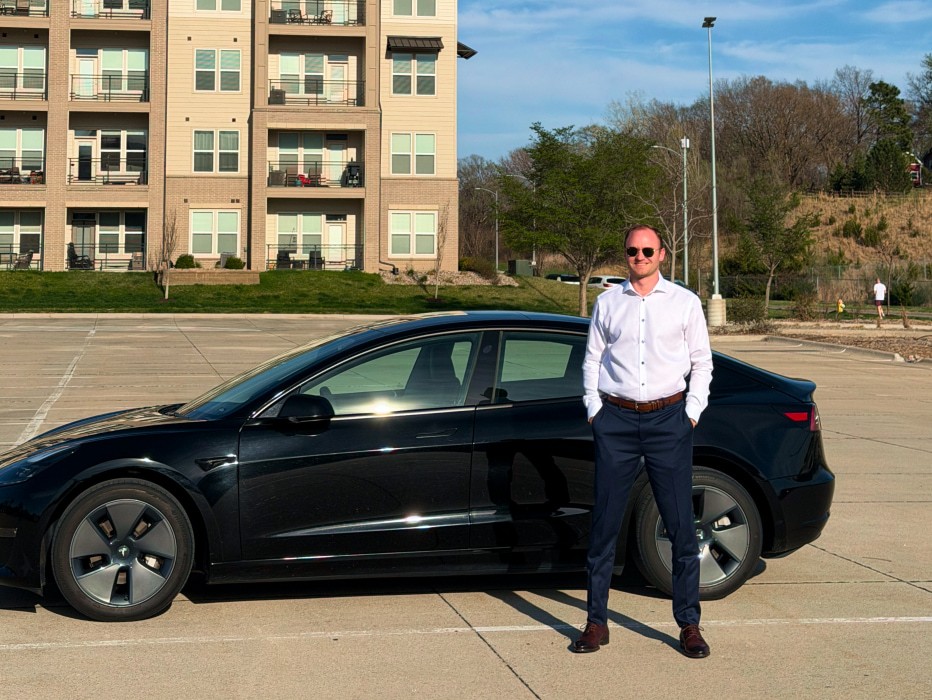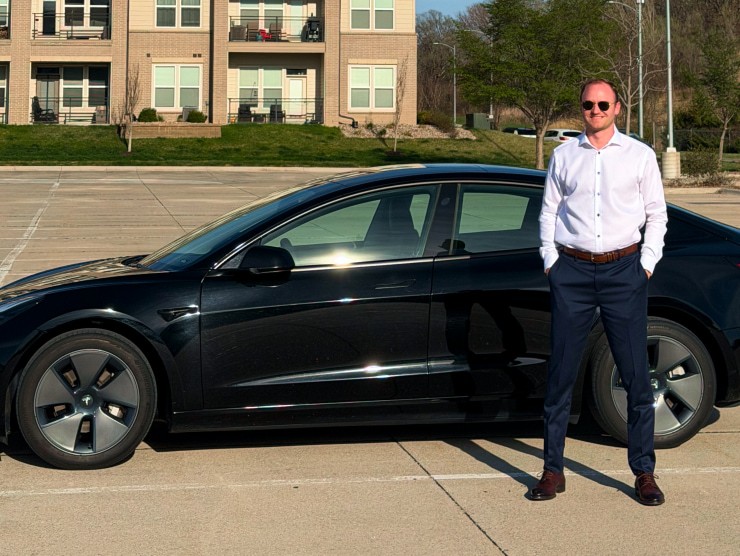
How Michael took his EV camping under the stars

How Michael took his EV camping under the stars

Michael K.

Age: 32 • Boston, MA • Physical Therapist

“I used to plan around gas all the time. Now I charge at home for $18 a week and I’m good to go.”

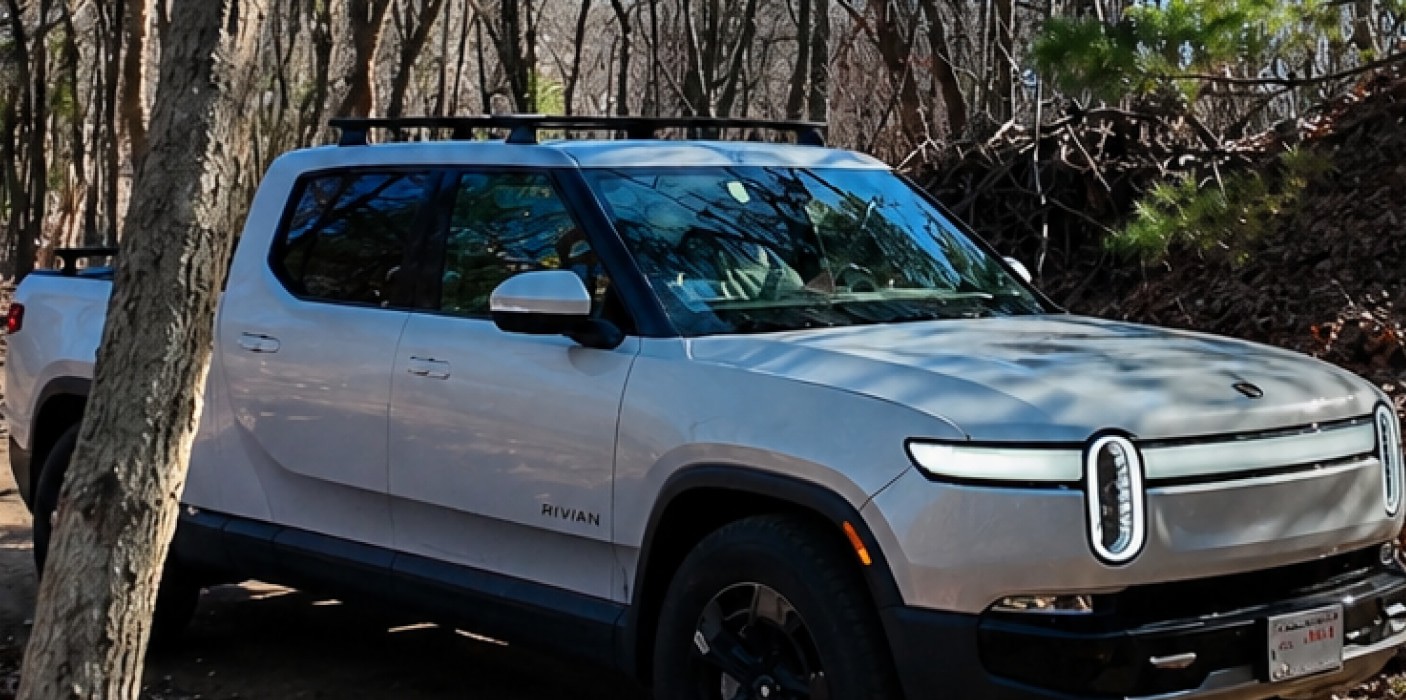
Michael is a physical therapist in Boston. He works long days during the week and spends his weekends outdoors, which meant any new truck had to keep up with him. His Rivian R1T does. It also accelerates 0 to 60 in 2.9 seconds — which, he notes, is a useful thing when he’s on the go.

The numbers that sold him weren’t on the spec sheet. The rebates he was able to stack resulted in a significant savings. At home, charging costs him about $100 a month. Regenerative braking has all but eliminated pad wear. Three years in, he hasn’t replaced his brakes once.

The part he didn’t expect was how much more he travels now. The frunk, the cabin, the truck bed — all of it packed with gear, a refrigerated cooler, a vehicle mattress, and the most important cargo, his dog Arlo. Trails, parks, camping nights spent in the truck bed looking at the stars. “I used to think range was an issue,” he says. “My Rivian gets 300 miles, same as my old gas truck, and it tells me exactly where to charge mid-trip. Range anxiety is a thing of the past.”

Michael, his dog Arlo, and his Rivian

The savings, Michael says, feel like they compound the longer he owns the truck. No oil changes. No exhaust repairs. Brakes that might outlast the vehicle. Every month without a gas stop is another month the math works in his favor. On top of that, the upfront incentives made the purchase a no brainer.

The trade-off he was worried about — range anxiety — disappeared in the first few months. “If I need to charge on the road, there’s a charger along my route,” he says. “The software does the hard part.”

$10,000

In incentives

300 mi

Full-charge range

3 years

of adventuring

  • EV Road Trips

    Maintance Savings

    Maintance Savings

    Maintance Savings

  • EV Road Trips

    EV That Handles My Gear

    Maintance Savings

    Maintance Savings

  • EV Road Trips

    Maintance Savings

    My EV Choice

    Maintance Savings

  • EV Road Trips

    Maintance Savings

    Maintance Savings

    EV Cost Savings

  • EV Road Trips

    Maintance Savings

    Maintance Savings

    Maintance Savings

  • EV Road Trips

    EV That Handles My Gear

    Maintance Savings

    Maintance Savings

  • EV Road Trips

    Maintance Savings

    My EV Choice

    Maintance Savings

  • EV Road Trips

    Maintance Savings

    Maintance Savings

    EV Cost Savings

On outdoor life with an EV:

“It doesn’t feel like I’m giving up anything from my old gas truck. I’m actually gaining more space.”
EV Incentives

State rebates and local utility programs can really add up to significant savings. Here’s how to claim them.

Charging Your EV

Everything you need to know about charging your EV — from what charger to buy to charging speeds and everything in between. 

More real stories from real drivers. Find someone like you.

 #DailyCommuter #HighMileage

“I used to plan around gas all the time. Now I charge at home for $18 a week and I’m good to go.”

#HeavyCommuter #SolarHome

“I charge while I sleep and start every morning with a full charge. It’s that simple.”

#UsedEV #BudgetBuyer

“My 2013 Nissan Leaf was $3,000, eliminating all car payments. It’s actually the cheapest car I’ve ever owned, gas or electric.”

#Multigenerational #FamilyLife

"Our car is in constant rotation. Sometimes I use it, sometimes my daughter or my son-in-law does. Different schedules, different plans, no stress."

#FamilyManager #FamilyBudget

"My EV savings with my family budget has been super helpful."


#ApartmentDweller #Incentives

"You don't need to own a home to own an EV. I just plug in at my apartment."


 #DailyCommuter · #HighMileage

“I used to plan around gas all the time. Now I charge at home for $18 a week and I’m good to go.”

#HeavyCommuter #SolarHome

“I charge while I sleep and start every morning with a full charge. It’s that simple.”

#UsedEV #BudgetBuyer

“My 2013 Nissan Leaf was $3,000, eliminating all car payments. It’s actually the cheapest car I’ve ever owned, gas or electric.”

#Multigenerational #FamilyLife

"Our car is in constant rotation. Sometimes I use it, sometimes my daughter or my son-in-law does. Different schedules, different plans, no stress."

#FamilyManager #FamilyBudget

"My EV savings with my family budget has been super helpful."

#ApartmentDweller #Incentives

"You don't need to own a home to own an EV. I just plug in at my apartment."


Frequently Asked Questions

How much does it cost to charge an EV at home?

Most drivers spend $30–60/month on electricity for a full charge every night. That’s roughly a third of what a typical gas car costs in fuel.

Do I need a garage to own an EV?

No. Millions of EV drivers charge at apartments, workplaces, and public stations. Many never charge at home at all.

How far can an EV go on a single charge?

Most new EVs get 250–400+ miles per charge. For daily driving, most people charge once or twice a week.

Can I take an EV on a road trip?

Yes. Fast-charging networks cover major highways. A typical stop takes 20–30 minutes — enough for coffee and a stretch.

Are used EVs a good deal?

Used EV prices have dropped significantly. Many 2–3 year old models still have 90%+ battery health and qualify for federal tax credits.

What incentives are available for EVs?

Federal tax credits up to $7,500, plus state and utility rebates that vary by location. Use our incentive finder to see what you qualify for.

Únete a #EléctricosParaTodos

Síguenos para conocer lo más nuevo en EV, consejos y testimonios.

Logo ElectricForAll White

© 2026 Veloz | Todos los derechos reservados.

© 2026 Veloz | Todos los derechos reservados.

La misión de Veloz, como organización sin fines de lucro, es educar al público de manera neutral sobre el estado actual de la tecnología de los vehículos eléctricos y su papel en la protección de un medio ambiente limpio y saludable. Veloz no respalda ni promueve a ningún fabricante de automóviles en particular y el contenido de este sitio no debe interpretarse como una recomendación comercial.

¹ El ahorro varía. Calcula el tuyo aquí. ² Ahorro anual estimado basado en precios promedio de la gasolina y el millaje. Los ahorros reales varían según los hábitos de manejo, costos de electricidad y modelo del vehículo. Usa nuestra calculadora para estimar sus ahorros. ³ Basado en un análisis de la industria sobre los componentes del tren motriz y los requisitos de mantenimiento. Los EV generalmente tienen menos partes móviles que los de gasolina, lo que reduce el mantenimiento rutinario. Los ahorros reales varían según la marca, el modelo y los hábitos de manejo. ⁴ Las estimaciones de autonomía varían según la marca, modelo y las condiciones de manejo. Muchos EV nuevos en el mercado actual ofrecen una autonomía estimada por la EPA de entre 240 y más de 400 millas con una carga completa.  ⁵ La velocidad de carga varía según el modelo del vehículo, el tamaño de la batería y las condiciones. Las estimaciones para cargadores de Nivel 2 se basan en cargadores domésticos típicos de 240 V. Las estimaciones de carga rápida en corriente directa (DC) reflejan condiciones óptimas utilizando infraestructura pública compatible. El rendimiento real puede variar.

Auto eléctrico blanco conduciendo por carretera hacia bosque y montañas bajo cielo despejado.

Únete a #EléctricosParaTodos

Síguenos para conocer lo más nuevo en EV, consejos y testimonios.

Política de Privacidad

Términos y Condiciones

Fuentes y Datos

© 2025 Veloz | Todos los derechos reservados.

La misión de Veloz, como organización sin fines de lucro, es educar al público de manera neutral sobre el estado actual de la tecnología de los vehículos eléctricos y su papel en la protección de un medio ambiente limpio y saludable. Veloz no respalda ni promueve a ningún fabricante de automóviles en particular y el contenido de este sitio no debe interpretarse como una recomendación comercial.

¹ Crédito fiscal federal de hasta $7,500 disponible para compradores elegibles de EV nuevos que califiquen. La elegibilidad y el monto pueden variar. Para más detalles, visita IRS.gov o consulta a un profesional de impuestos. ² Ahorro estimado basado en un análisis del costo total de propiedad que compara los EV y los autos de gasolina más populares durante su vida útil promedio. Los ahorros reales pueden variar según el modelo, precios de la gasolina, costos de mantenci y los hábitos de manejo. ³ Ahorro anual estimado basado en precios promedio de la gasolina y el millaje. Los ahorros reales varían según los hábitos de manejo, costos de electricidad y modelo del vehículo. Usa nuestra calculadora para estimar sus ahorros. ⁴ Basado en un análisis de la industria sobre los componentes del tren motriz y los requisitos de mantenimiento. Los EV generalmente tienen menos partes móviles que los de gasolina, lo que reduce el mantenimiento rutinario. Los ahorros reales varían según la marca, el modelo y los hábitos de manejo. ⁵ Las estimaciones de autonomía varían según la marca, modelo y las condiciones de manejo. Muchos EV nuevos en el mercado actual ofrecen una autonomía estimada por la EPA de entre 240 y más de 400 millas con una carga completa. ⁶ La velocidad de carga varía según el modelo del vehículo, el tamaño de la batería y las condiciones. Las estimaciones para cargadores de Nivel 2 se basan en cargadores domésticos típicos de 240 V. Las estimaciones de carga rápida en corriente directa (DC) reflejan condiciones óptimas utilizando infraestructura pública compatible. El rendimiento real puede variar.⁷ Crédito fiscal federal de hasta $4,000 disponible para compradores elegibles de EV usados que reúnan los requisitos. Aplican requisitos de ingresos y del vehículo. Visite IRS.gov o consulte a un profesional de impuestos para más detalles.